Invisible Flowers – Almost






Invisible Flowers – Almost
by Adrian Leighton
Among the Springtime flowers that brighten our days, like Crocuses, Daffodils, Lesser Celandine and Bluebells are a number that go about their business in an inconspicuous way. On my way , with my wheelbarrow down the canal towpath to tend our plot at Lock15 gardens, my eye caught sight of a couple of candidates for “The Most Invisible Spring Flower”.
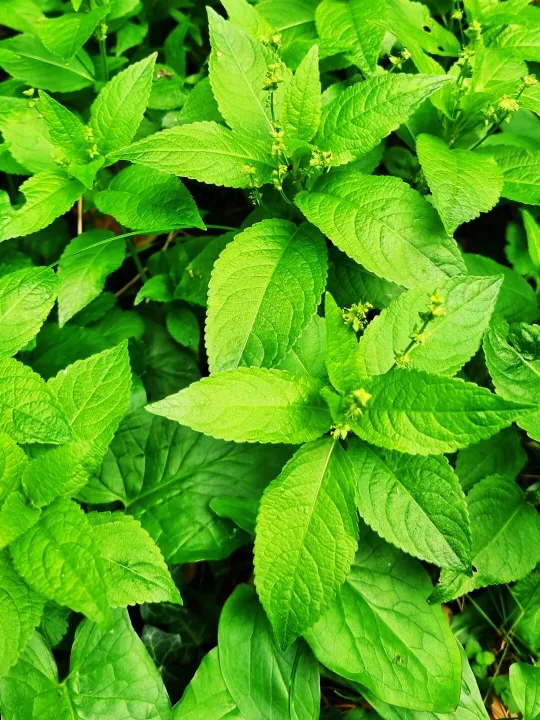
Number one contender for the title was spread along the hedgerow at Lock 14. It goes by the interesting name of Dog’s Mercury. Its scientific name is Mercurialis perennis and is related to the cultivated “marmite” plants in the Euphorbia family.
Like their showy cousins, Dog’s Mercury flowers are almost invisible because they are greenish yellow and blend in with their leaves. They are also very small, looking a bit like an upright catkin.
The plants are primarily pollinated by the wind. It is (and here is a word to feed into a conversion this week) “dioecious”, meaning male and female flowers grow on separate plants, these bloom early before the trees have leaves, allowing wind to carry the pollen from male to female plants. This is probably why the flowers are so inconspicuous , as they do not have to attract pollinators. Having said that, in a “belt and braces” policy, the female plant has evolved secondary nectar bearing parts attractive to ants. It is not satisfied with that, as it can also propagate underground through its rhizomes. All in all making it a real challenge to the “how to get rid of” brigade.
The name it is known by seems to have a couple of origins. First, the term “dog” has often been a derogatory term meaning of little value. The “mercury” species name relates to a historically association with inedible plants. This is one of those common toxic wild plants. Hence the second origin of the name, as a plant that is poisonous to dogs. Not having the smelling capacity of dogs, we may not notice the distinctive odour that the plant exudes, which has been described by sensitive noses as “foetid,unpleasant and acrid, resembling rotting fish” – yummy!
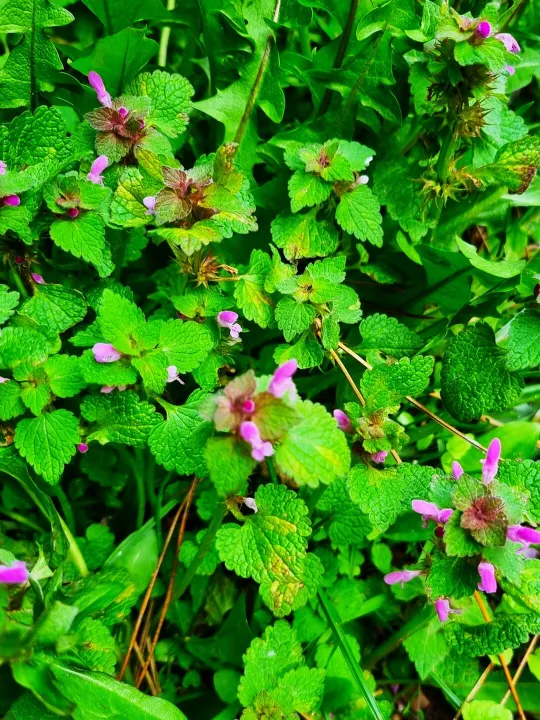
Number two on my list of inconspicuous plants, perhaps is a misnomer, because of its bright purple flowers. Yet it is very easy to pass by it without registering its presence. Pushing my wheelbarrow back up the slope as I approached Lock13, I noticed a number of these plants spread along the pathway beside the canal. They were Dead Red Nettles, Lamium purpueum. Growing low to the ground, the attractiveness of the reddish-purple flowers can be easily overlooked.
The name “nettle” may make us wary of it, as the term is strongly attached to the Common Nettle or Stinging Nettle, which comes from a completely different family of plants. Nevertheless, the hairy leaves do have a similarity. The term “dead” should reassure us that it is not a stinging variety. Indeed, it is an edible plant with a long history of medicinal uses including having anti-inflammatory, antimicrobial and soothing properties, although it is wise not to ingest too much. Flowering early, the flowers provide food for early bumblebees and other insects that emerge as the sun
Shines and the temperature rises – and wouldn’t that be nice.



Get In Touch
AudlemOnline is powered by our active community.
Please send us your news and views using the button below:
Email: editor@audlem.org